
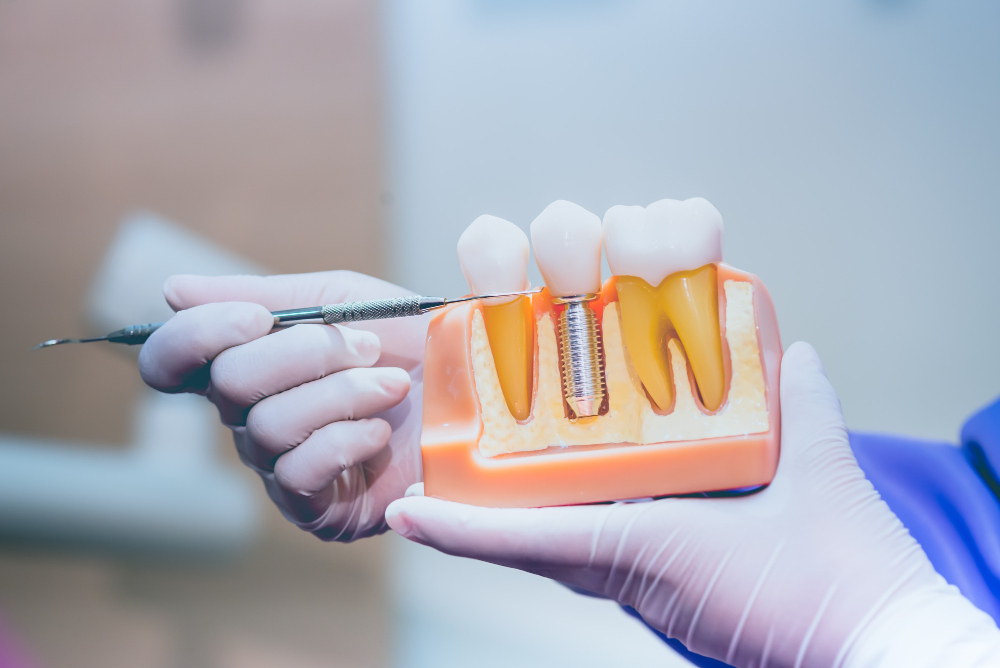
What Are Dental Implants?
Dental implants are strong, small posts made of metal. Dentists place them in the jawbone to replace missing teeth. Because they act like natural tooth roots, dental implants help support crowns or bridges. In fact, many people choose dental implants because they look and feel like real teeth. According to the CDC, tooth loss is common, but dental implants offer a lasting solution.
How Dental Implants Restore Oral Function
When you lose a tooth, chewing and speaking can become hard. However, dental implants restore these functions. Since implants are fixed in the jaw, they do not slip like dentures. As a result, you can eat your favorite foods with ease. Also, dental implants help keep your jawbone healthy. Without a tooth root, the bone can shrink over time. But implants keep the bone strong by giving it support.
Benefits for Smile Aesthetics and Confidence
Besides restoring function, dental implants improve your smile. For example, they fill gaps left by missing teeth. This makes your smile look complete and natural. In addition, implants do not affect nearby teeth. Because of this, you can feel more confident when you talk or laugh. Many people say their self-esteem improves after getting dental implants. So, you can restore your smile with implants and feel better about your appearance.
The Dental Implant Procedure: Steps and Expectations
Getting dental implants involves several steps. First, your dentist checks your mouth and takes X-rays. Next, the dentist places the implant post into your jawbone. After that, you wait a few months for the bone to heal around the implant. Once healed, the dentist attaches a small connector called an abutment. Finally, a custom-made crown is placed on top. Throughout the process, your dentist will explain each step. Most people feel only mild discomfort, which goes away quickly.
Who Is a Good Candidate for Dental Implants?
Not everyone can get dental implants. However, many adults are good candidates. You may be a good fit if you:
Still, your dentist will check your health and discuss your options. Sometimes, people need extra treatments, like bone grafts, before getting implants.
Aftercare and Long-Term Success
Proper care helps dental implants last many years. For best results, brush and floss every day. Also, visit your dentist for regular check-ups. With good care, implants can last a lifetime. According to dental journals, most implants have a success rate of over 95%. However, smoking and poor oral hygiene can increase the risk of problems. So, follow your dentist’s advice for long-term dental implant care.
Common Myths and Facts About Dental Implants
Prevention of Tooth Loss and Maintaining Oral Health
Even though dental implants are a great option, it is best to prevent tooth loss. To keep your teeth healthy, brush twice a day and floss daily. In addition, eat a balanced diet and limit sugary snacks. Regular dental visits help catch problems early. If you protect your teeth, you may not need implants in the future. However, if you do lose a tooth, dental implants can restore your smile and function.
Conclusion: Take the Next Step
Dental implants offer many benefits for function and appearance. They help you eat, speak, and smile with confidence. If you are missing teeth, consult a dental specialist Dr. Ravi Chandra B S to find out if dental implants are right for you.